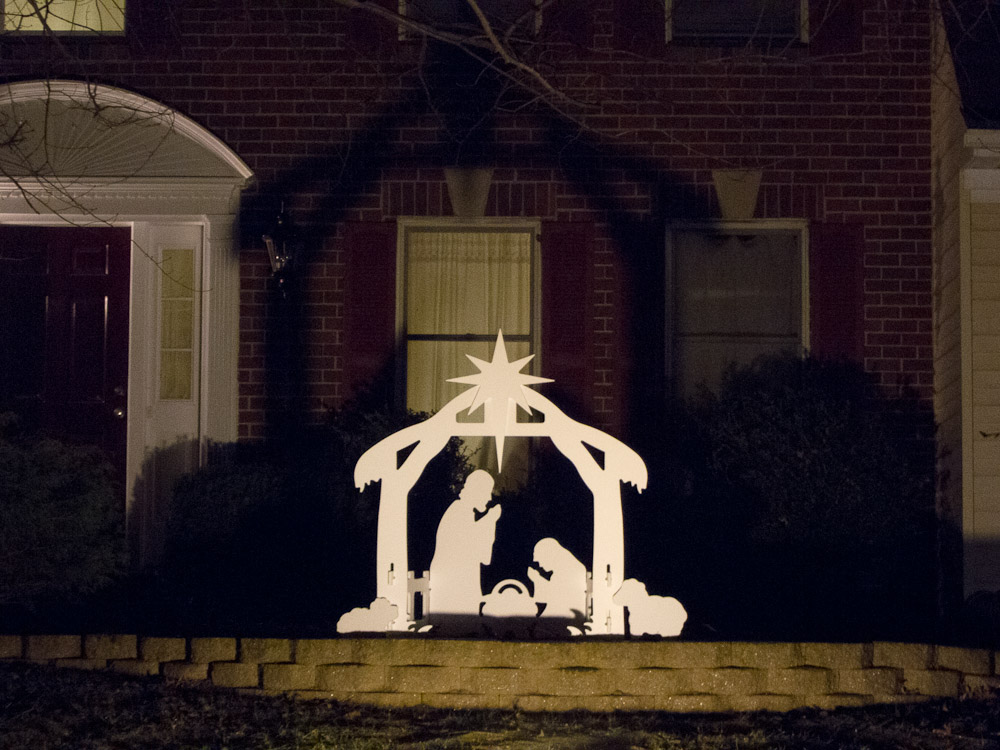
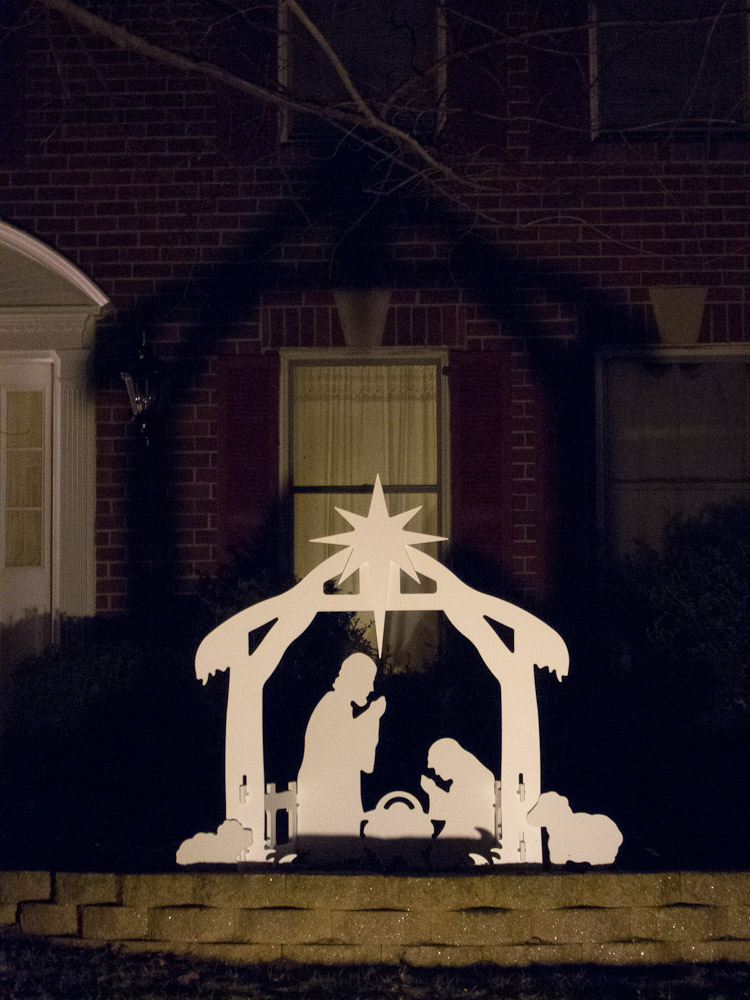
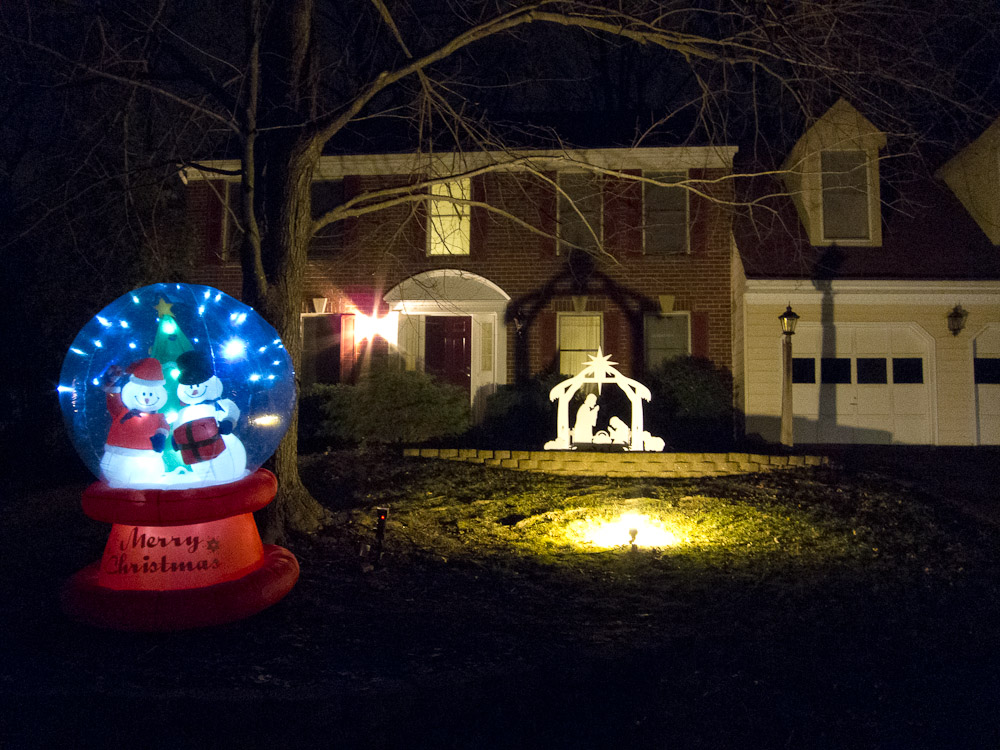
I’ve been meaning to put up a Nativity scene in our yard for years, but this year I remembered to get one early enough. Each year I think I’ll try to add more members; started with just the Holy Family and a couple of lambs. One nice effect is the shadow of the Nativity stable frames one of the windows our house. Neat.
The snowcouple snowglobe had to go up as well; the kids like it. I tried leaving it out, but Olivia remembered it from last year…:)
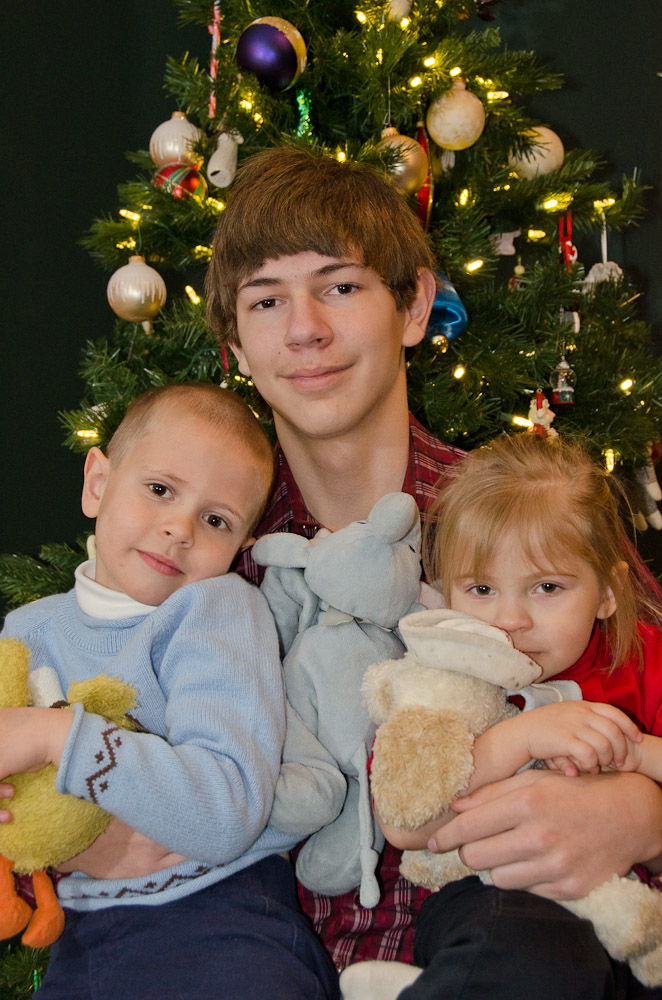
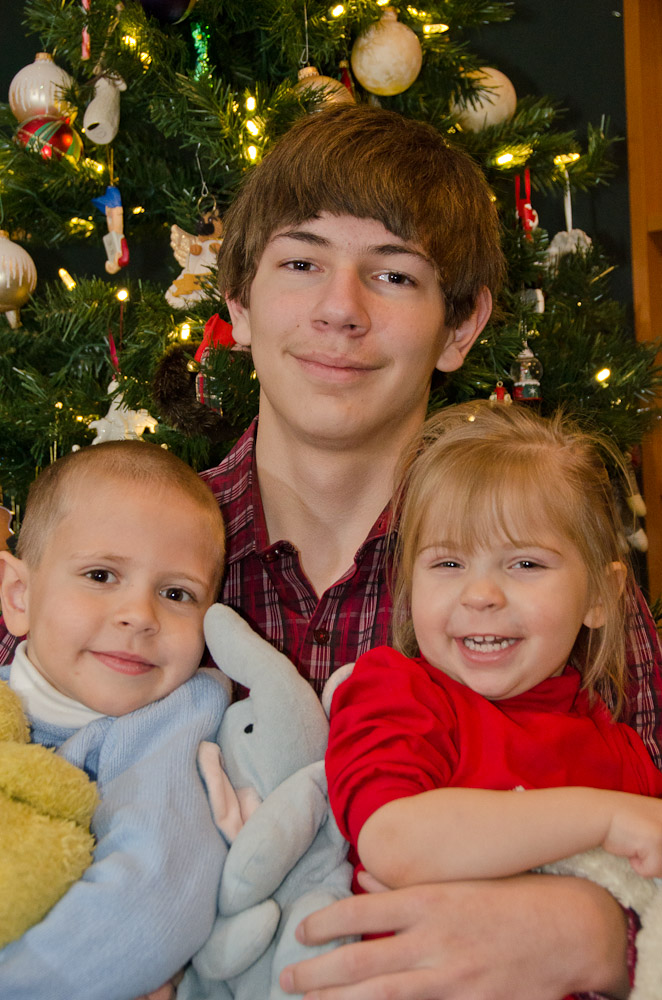
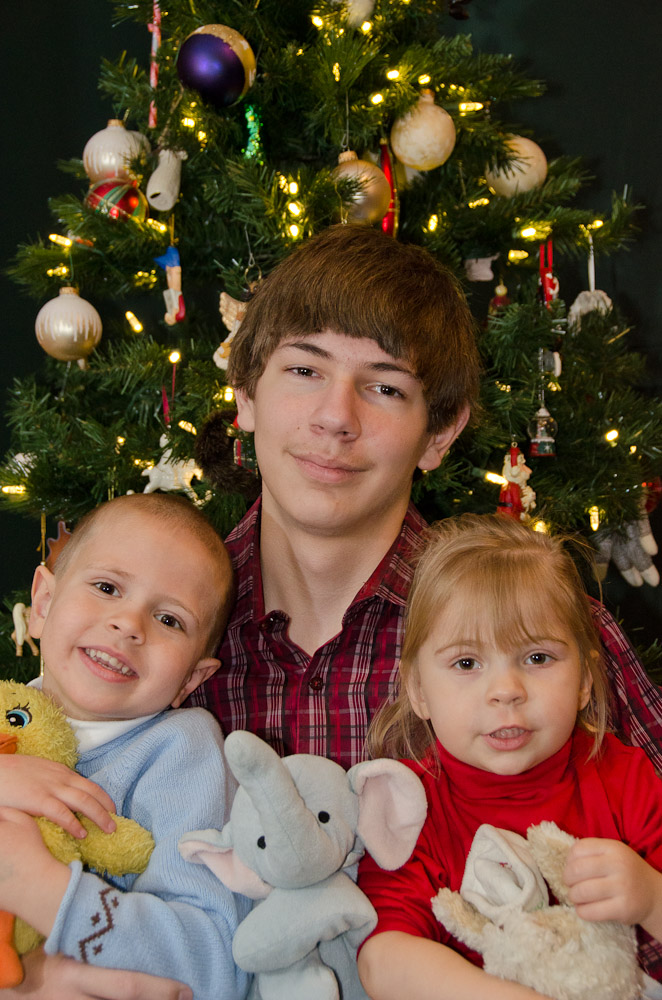
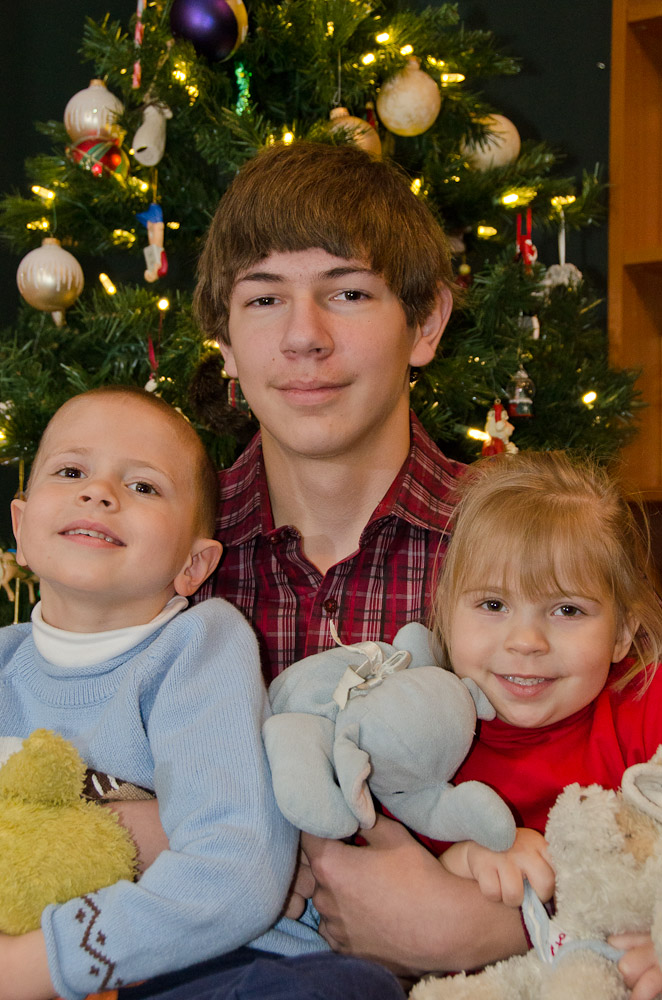
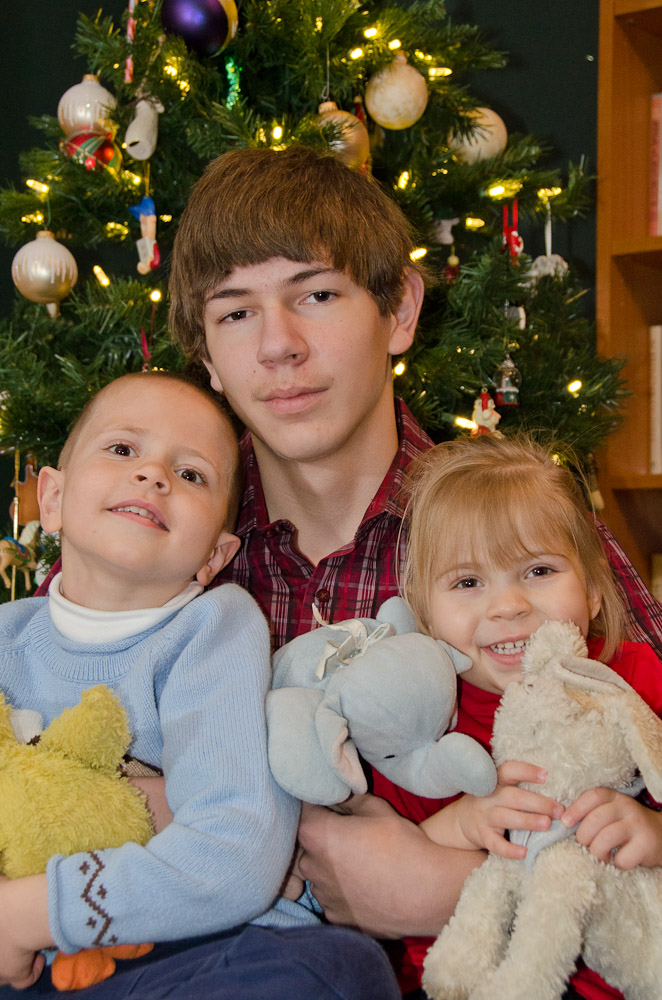
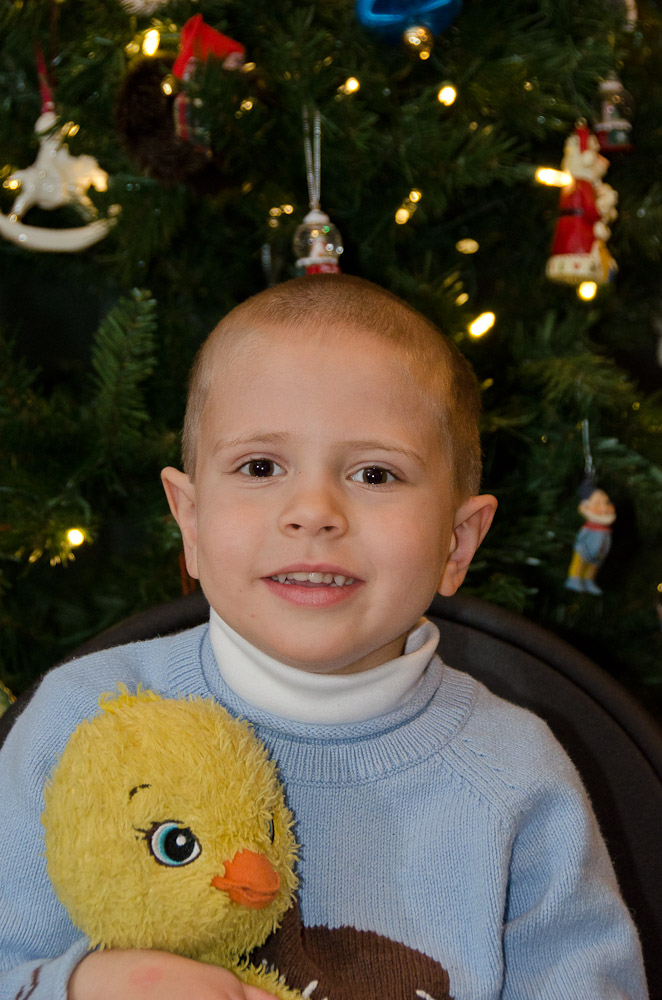
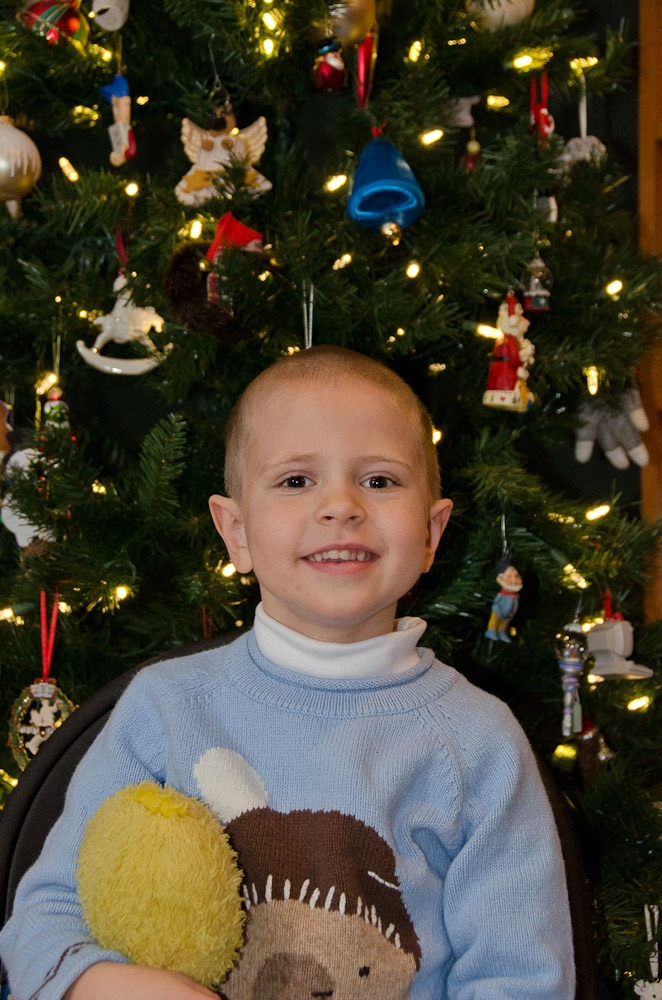
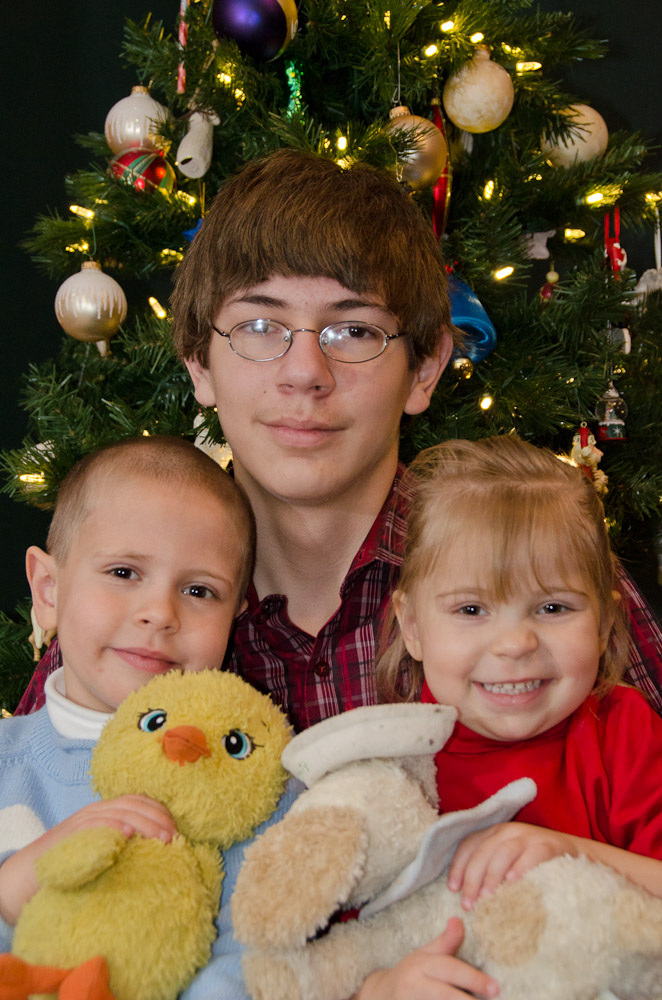
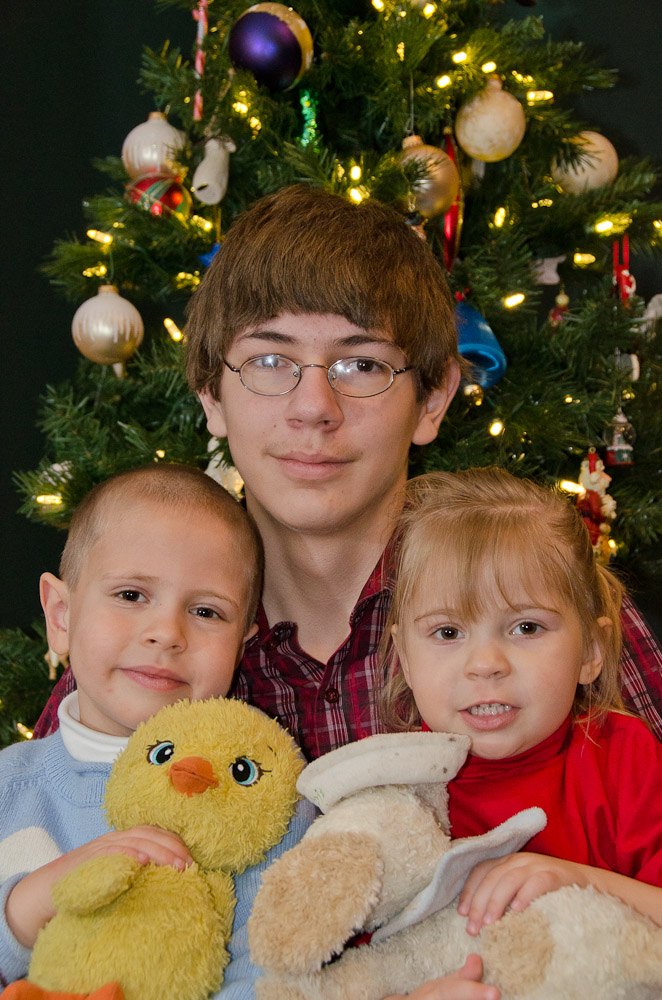
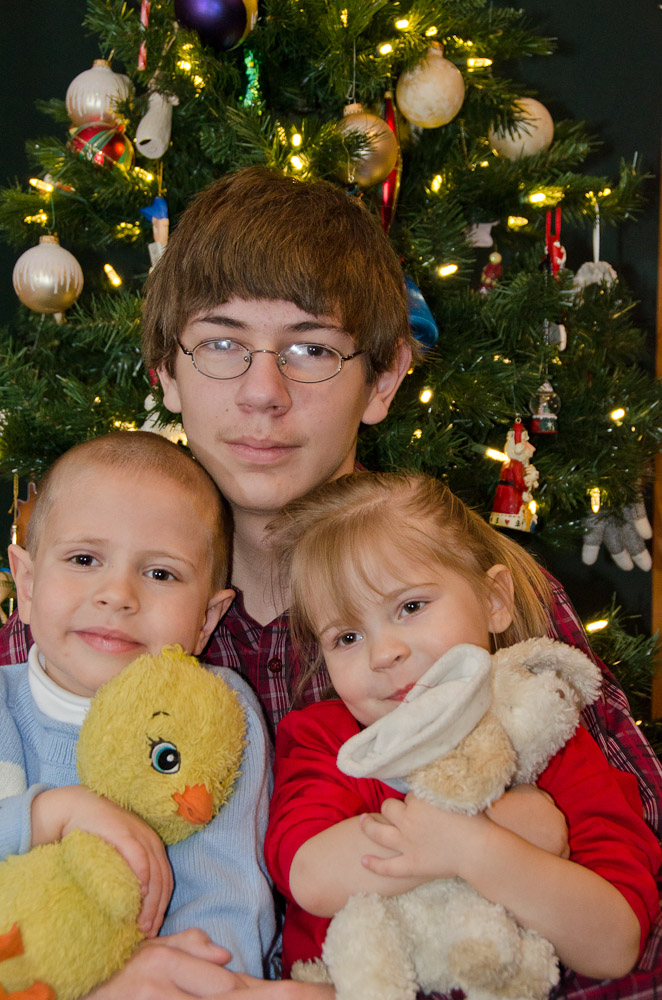
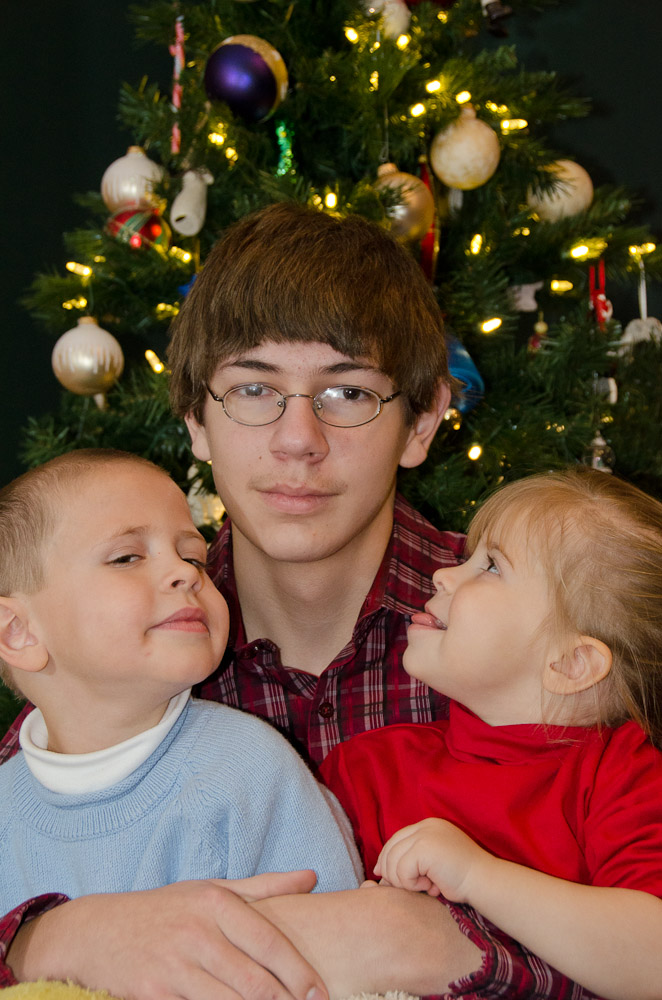
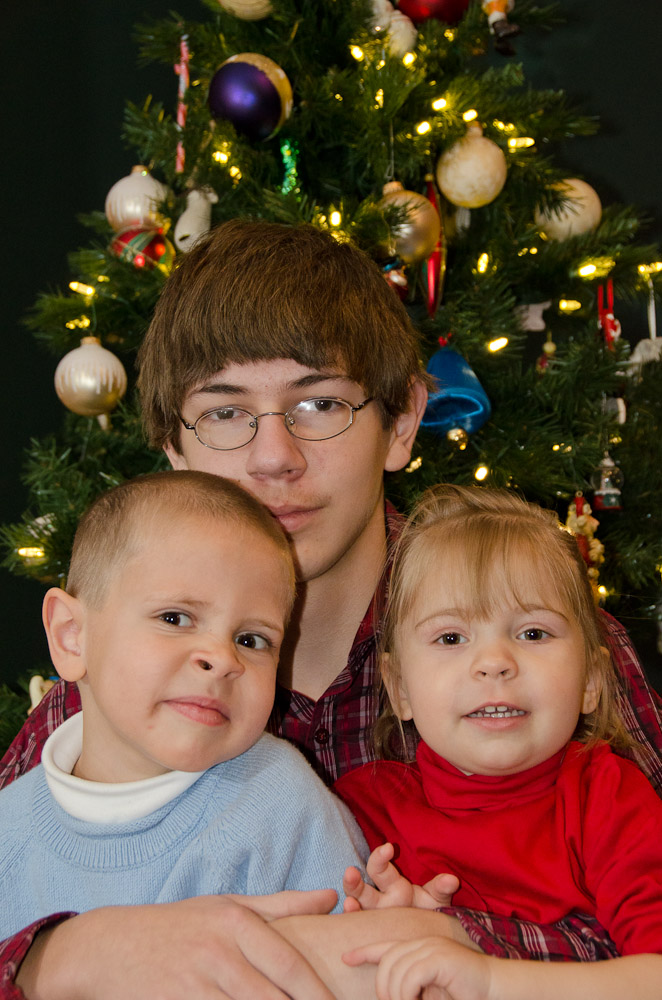
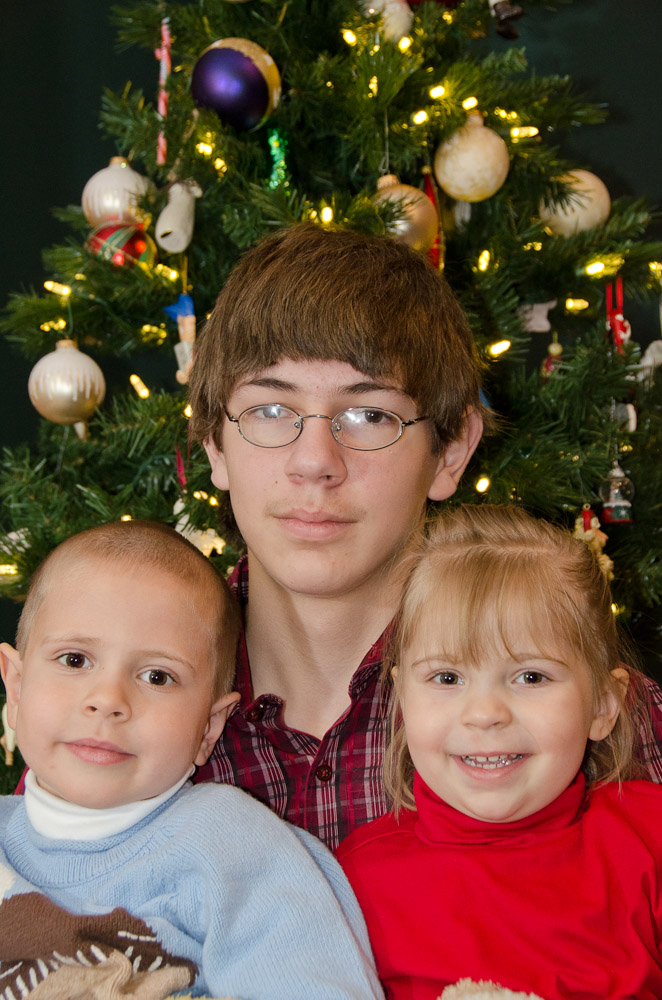
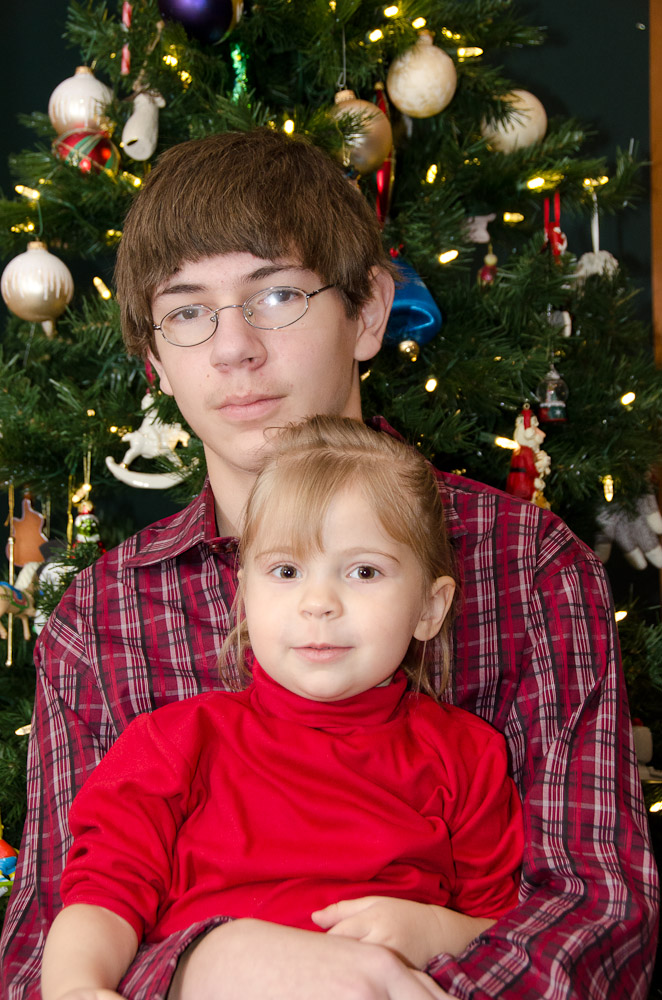
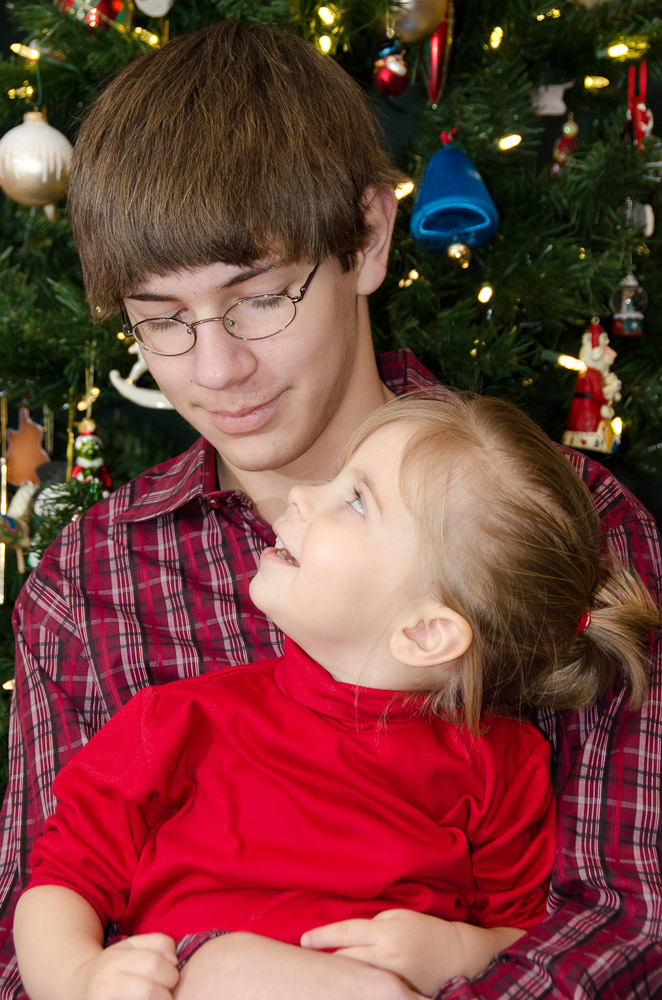
Yearly (attempt) at a Christmas portrait of the kids (see last year…). This year the youngest two were smiling a lot more than Big Brother Dylan (most of those now toast). Note however, that when Preston and Olivia asked if they could hold their “friends” (Mr. Duck and Skippit Dog), Dylan also had to run upstairs to get his Elephant. :)
We haven’t decided on the official one yet. Might be a collage. :) Click picture for slideshow…
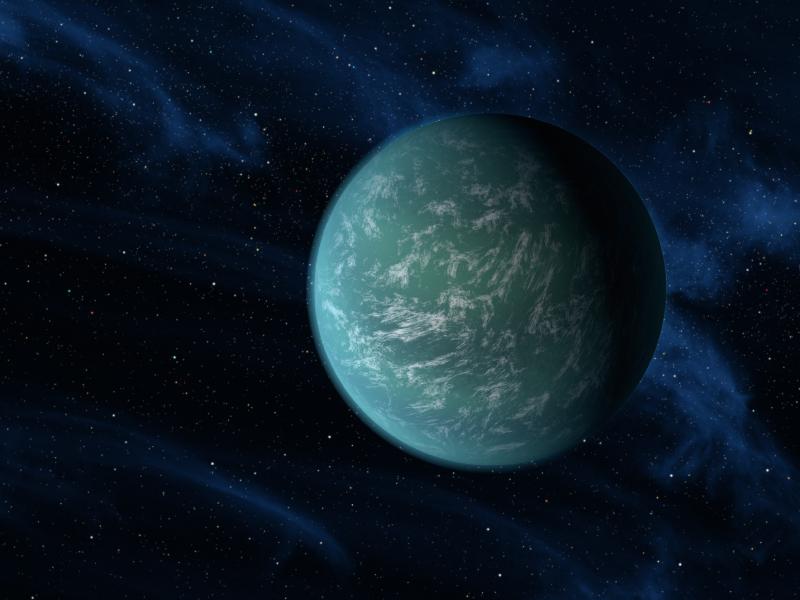
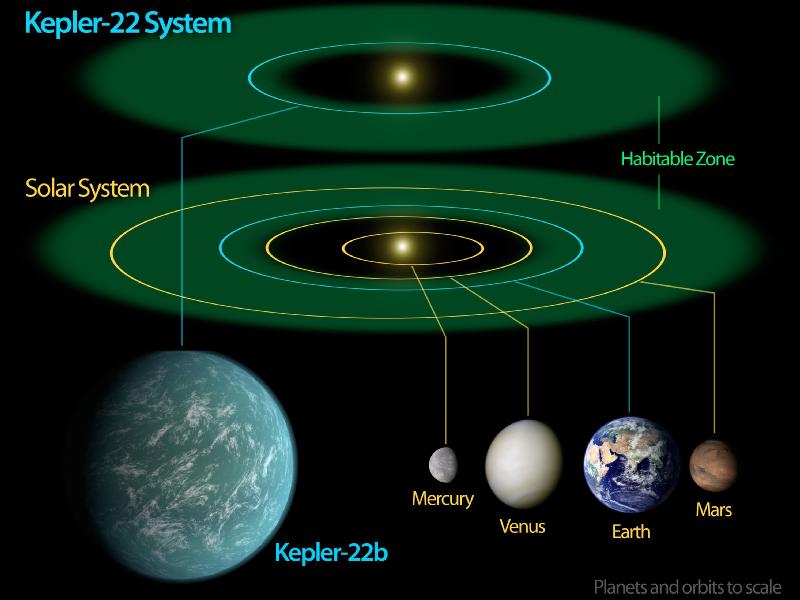
Scientists at NASA announced today that they have discovered the first (probably rocky) “superEarth” planet orbiting in the “habitable zone” of a Sun-like star. The “habitable zone” is an orbit where liquid water is possible on the surface of the planet.
This newly discovered planet is a “superEarth” because it is only ~2.4 times the size of the earth, and thus not a gas-giant. Gas-giant planets have previously been discovered in such habitable zone orbits of stars, but this is the first earth-type (i.e. rocky) planet. Gas giants in general are not considered capable of supporting life (as we know it).
On the other hand, Earth-like rocky planets in habitable zones are capable of supporting life. Kepler-22b is estimated to have an average surface temp of about 72 degrees Fahrenheit. Nice!
Discoveries like these really do hint that life may very well be possible in lots of other systems in the universe. In order to detect such planets, their orbits must be “on-edge” in relation to us. Specialized telescopes like the Kepler can detect the (slight) dimming of the light from the star as the planet travels in front of the star (between us and the star). If the orbit of the planet was off-edge (in relation to us), it wouldn’t block the light from the star anytime during it’s orbit, so wouldn’t be detected. So, it is quite likely that there are many more such planets we can’t detect via this method. Wow!
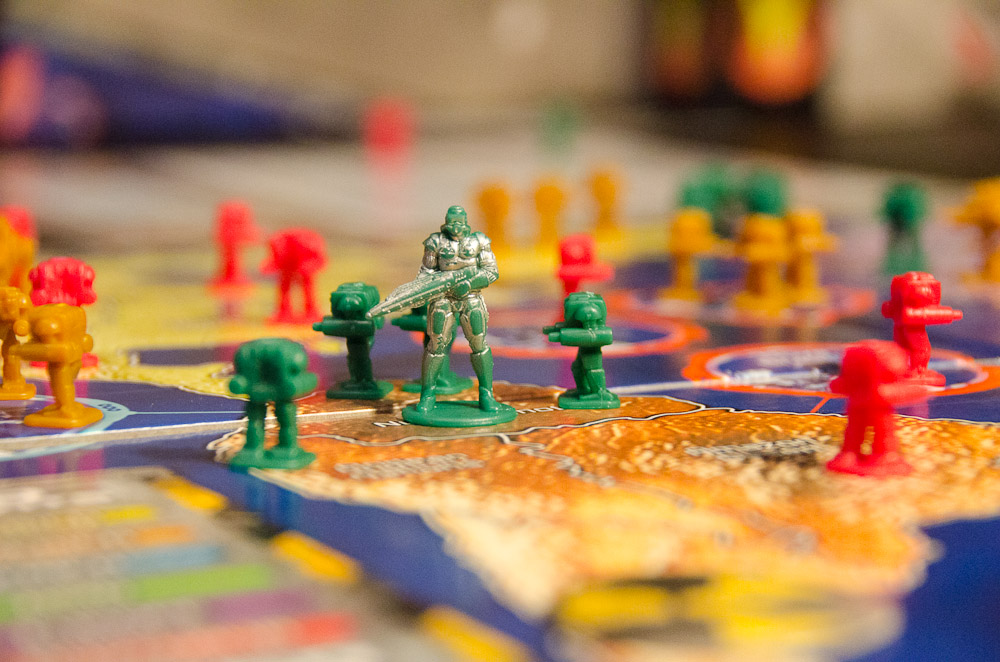
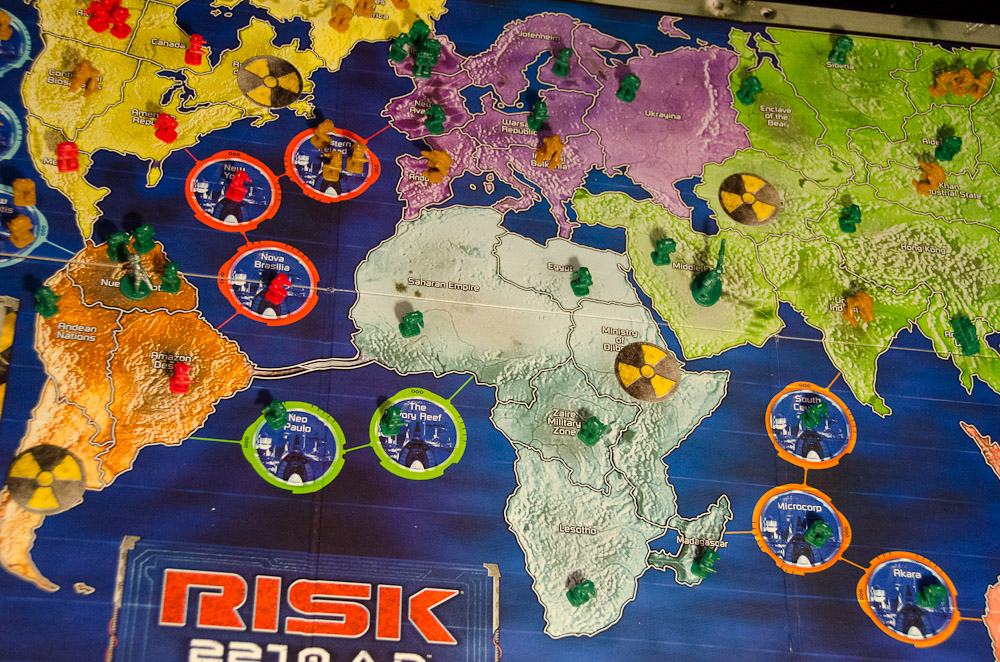
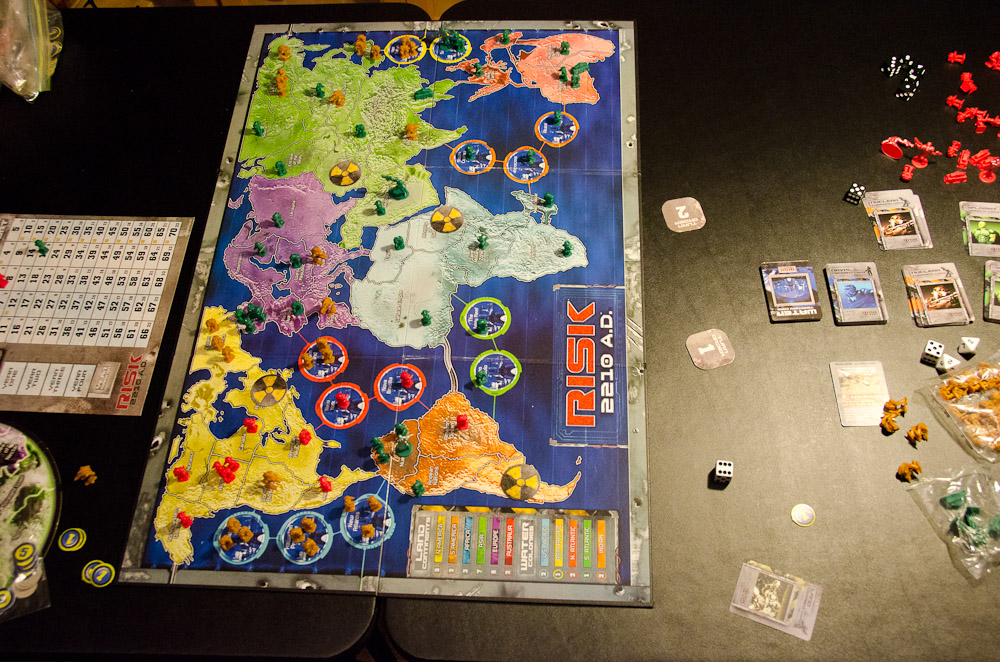
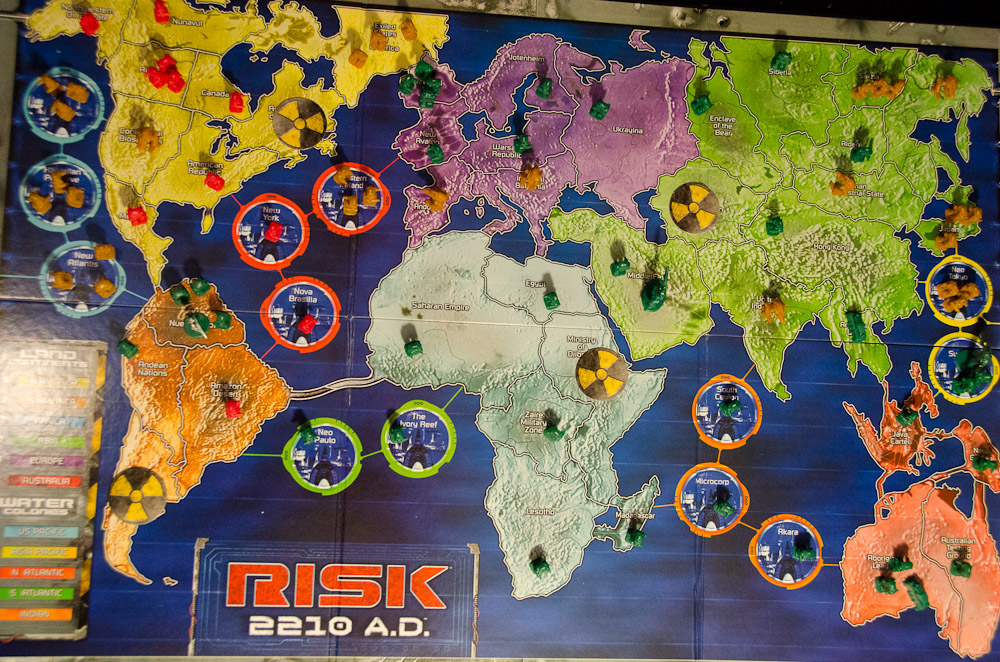
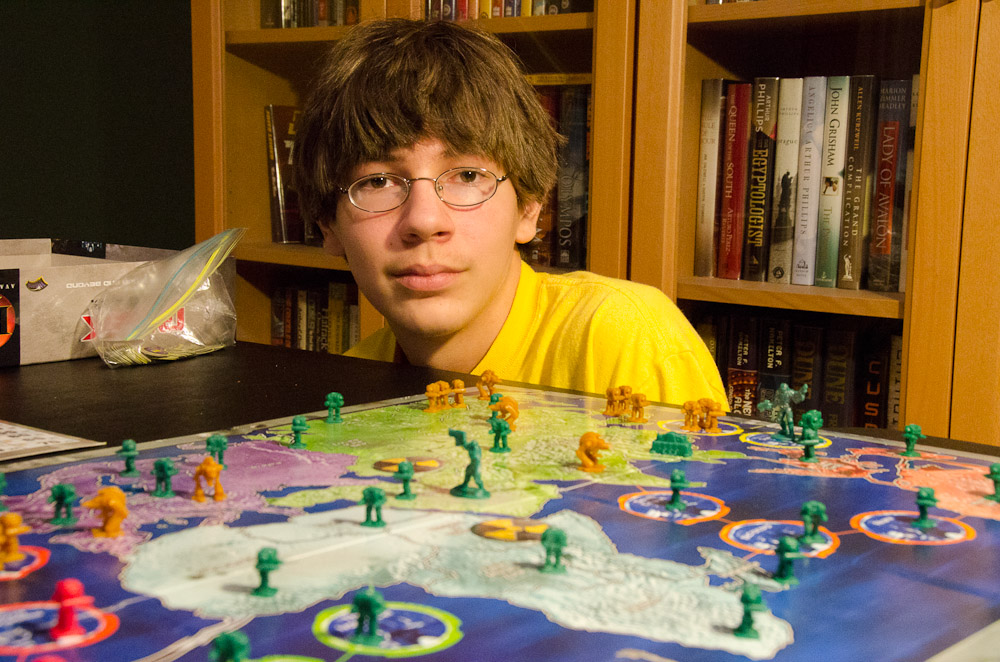
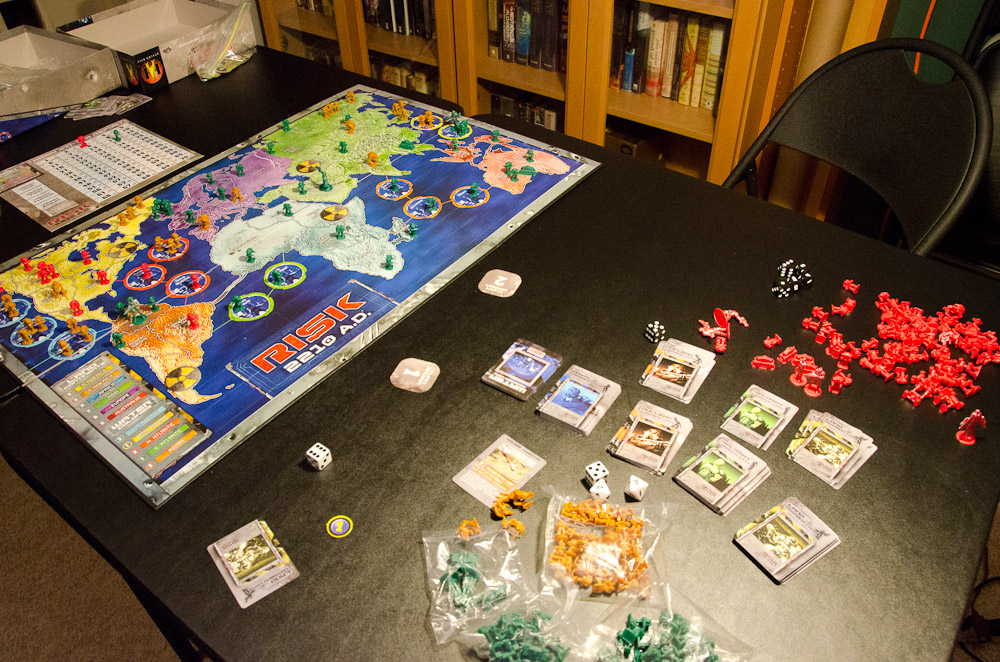
Dylan and I played a game of Risk 2210 this weekend. I finally managed to clear space to setup a gaming table in the man cave. This allows us to leave board games in play and continue later – without the little kids or the cat demolishing things. In this case, Dylan demolished me anyway, so no loss. I do like this version of Risk even better than classic – mostly because it is limited to 5 “turn years”, so doesn’t go on forever. It still suffers from the classic Risk game mechanic of rolling dice to attack, so you can (as I found) quickly lose ground by losing dice rolls (either attacking or defending).
This new version does have added features, such as command cards, which (if you are lucky enough to draw them) can quickly turn the game around. It also features underwater (naval) territories as well as lunar territories. Game mechanics such as having commanders (land, naval, space, diplomat, or nuclear) which allow you to roll (or defend) with 8-sided die, space stations (to help defend, or get you to the moon), etc.
But all in all, it’s still Risk, and still basically a terrritory-conquering game. Fun, but only occasionally. I’m trying to use it to get Dylan into board games, as he really likes Classic Risk. Next will be to get him to play War of the Ring.
Risk 2210
Risk 2210
Risk 2210
Risk 2210 – Naval Commander
Risk 2210 – Dylan won
Risk 2210
Vraye Foy — “true faith”, the Boswell motto, on a bookplate of the family crest: a hooded hawk. Click anywhere to close.