

Posts by boz

High quality, unprotected music available on iTunes

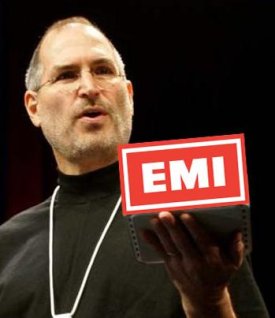
Apple has inked an agreement with EMI that will let them sell high quality versions of songs without copy protection. EMI will be releasing their catalog DRM (Digital Rights Management)-free. Yep, that means that finally you can download a song in iTunes, and use it on as many computers or devices as you want, or convert to other formats with no restrictions.

The DRM restrictions have been the main reasons that I have only purchased about 5 songs on iTunes – such songs only work on 3 computers and your iPod. My music at home is stored on a Linux box and served up to my stereo via Tivo. I buy CD’s and convert the music to mp3’s myself. The other reason I have purchased few songs via iTunes was the low quality of purchased iTunes (or other online) songs vs. those I can create myself from CD’s.

With this new development, I can now purchase individual songs, in high quality (256-bit AAC vs. the lower quality 128-bit AAC offered to date), with no DRM. Yes, I’ll have to convert them again to mp3 to listen via Tivo, but that’s a more viable option now with a higher-quality original. Now I can get high-quality *individual* songs – to date I’ve had to purchase an entire CD even if I wanted a high-quality version of only a single track.

Each song will cost $0.30 more in the DRM-free/high quality version ($1.29 vs. $0.99). What is also a real cool deal is that you can upgrade your currently purchased music to the high quality version for the $0.30 difference – so you can maintain your investment in iTunes.

Apple will also continue to offer the lower-quality, DRM (protected) versions of songs for $0.99, so those that don’t care about anything but price won’t be charged more. This also means that Apple’s competitors won’t have a price advantage.

This is due to happen in May, 2007.

String Theory Debate

Brian GreeneLawrence Krauss

Brian Greene (left) and Lawrence Krauss (right), participated in a String Theory Debate last night at the Natural History Museum (Smithsonian Associates Program), with Michael Turner acting as moderator.

More pictures are also available on the photography page.

I recorded the first 75 minutes of the debate (audio only), as well as the last 15 minutes (as video) using my Canon S3. I am very pleased with the audio quality from this camera (samples in stereo at 44khz).


Both Greene and Krauss have written popular books on science, with Greene’s The Elegant Universe selling a million copies. This book was made into a NOVA mini-series, The Elegant Universe, which Greene hosted. Greene’s latest book is The Fabric of the Cosmos.
Krauss has written a number of books, including The Physics of Star Trek and his most recent, Hiding in the Mirror

This was a very lively debate, with Brian Greene taking the “pro” String Theory side (probably since he is a major researcher in the field), and Lawrence Krauss taking the “con” side. Krauss was quick to point out that they are on the same side, unlike the “debates” he has against Intelligent Design proponents (or alien abductees). Both are working scientists; Professor Greene is at Columbia University (physics and math), and Professor Krauss is at Case Western Reserve University (physics and astronomy). Professor Turner is at the University of Chicago.

What is string theory? String theory is an attempt at unification. The theory attempts to unite things that are very big (general relativity; gravity) with the very small (quantum mechanics). Such a unifying theory is very appealing to scientists, but even Einstein was unable to reconcile the two areas.

I’ll summarize (and paraphrase) the points each made below, but it was a long debate, so I’d suggest interested parties listen to the audio recordings.

Greene: String theory is an attempt to unify gravity and general relativity with quantum mechanics. As you go smaller and smaller you see matter made up of atoms (made up of electrons surrounding a nucleus). The nucleus is in turn made up of protons and neutrons, and these in turn are made up of quarks. String theory speculates that if you go a billion billion times smaller, you see that quarks are in turn made up of vibrating “strings”, or “filaments”. Think of a violin string — as it vibrates in different ways, it produces different “notes”. “Elementary” particles, like quarks, can be likened to the “notes” vibrating strings make.

Krauss: The problem is you can’t actually test a single aspect of this; there is no way to “see” something a billion billion times smaller than a quark. [Greene: yes, I said that.]

Krauss: Another issue is that these “strings” are vibrating in a universe that has more dimensions (about 10-11) than the 3 of space and 1 of time we are familiar with. What are these “extra” dimensions? Do they have any basis in reality, or are they just there to make the math work out?

Both agreed that *maybe* the new Large Hadron Collider at CERN will produce something that verifies something, but that’s a big maybe.

Greene did make a comment early on: “If you ask me do I believe in string theory, then the answer is ‘no’ – it can’t be tested yet. But do I believe it is the best shot we have at a unifying theory, then ’emphatically yes’ “. [see the audio recording for the exact quote].

Paper from elephant dung

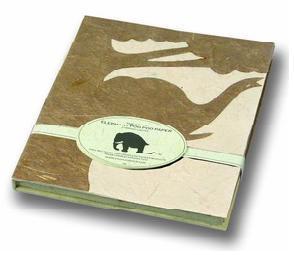
poopooThe Elephant Poo Poo Paper Company makes writing journals and other paper products out of elephant poo. No, it doesn’t smell. Really:

“We can make about 25 large sheets of paper from a single piece (or turd) of elephant poo poo!!! That translates into about 10 standard sized journals including the front and back covers! Neat, huh!?”

Irony

Irony: Sitting in Starbucks having my second “blackeye” while reading an article in the Washington Post about how Starbucks has “lost its soul and can’t find it”. It’s true: Starbucks doesn’t even smell like roasted coffee anymore — it’s “sterile and cookie cutter”. Odd thing is that the quotes are from the Chairman of Starbucks, Howard Shultz. They don’t even manually make the espresso anymore; they press a button on an automated machine. The coffee is sealed in packages (no smell!). The article also stated that Starbucks has 13,000 stores (and Shultz wants to expand to 45,000); they wonder why they are “sterile”.

I do like the taste of Starbucks’ coffee. I used to go to a local coffee-roasting shop, but the Starbucks store is more convenient for me right now. I think I’ll start going back to the local place again, even if it is a few extra minutes away (they have good coffee – and it smells like roasting coffee in the place).