


The paper
A mid-Holocene age for Monte Verde challenges the timeline of human colonization of South America
Science, vol. 391, no. 6791, pp. 1283-1288, 2026-03-19 · doi.org/10.1126/science.adw9217
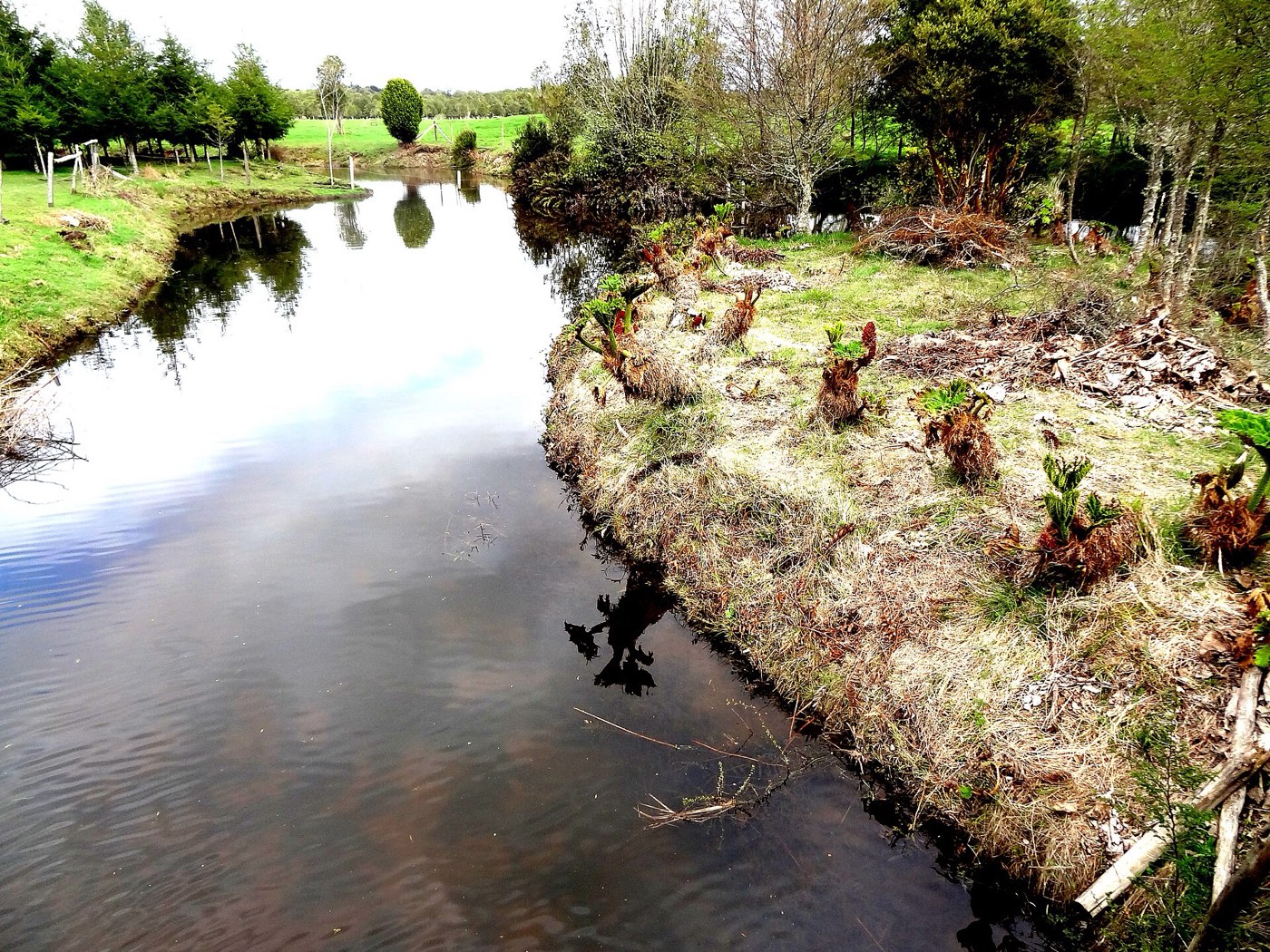

For three decades Monte Verde, in southern Chile, held the earliest date for people in South America: about 14,500 years ago, older than the Clovis sites of North America and even than the earliest firm sites in Alaska, the presumed way in. A team led by Todd Surovell and Claudio Latorre, the first to study the site independently of its excavators in nearly fifty years, now argues that the layer behind that date is Middle Holocene: 8,200 to 4,200 years old.
The case is in the valley’s layers. An old terrace holds a bed of wood 14,750 to 13,400 years old, the same age as the site’s famous dates, capped by marsh mud and by a volcanic ash laid down 11,000 years ago. Chinchihuapi Creek later cut through all of it, ash included, and filled the cut with new sand, dated 8,600 to 2,800 years. Monte Verde II lies at the base of that fill, so it is younger than the ash; its Ice Age wood, the authors argue, was washed in from the old terrace, as the creek still carries wood today.
If they are right, Monte Verde no longer shows that people reached South America before Clovis, and a first entry down the ice-free corridor through the interior of North America is back in play. It does not settle the larger question. In a Perspective alongside the paper, Jason Rech points out that other sites now look older than Clovis, among them the human footprints at White Sands, New Mexico, dated to 23,000–21,000 years ago.
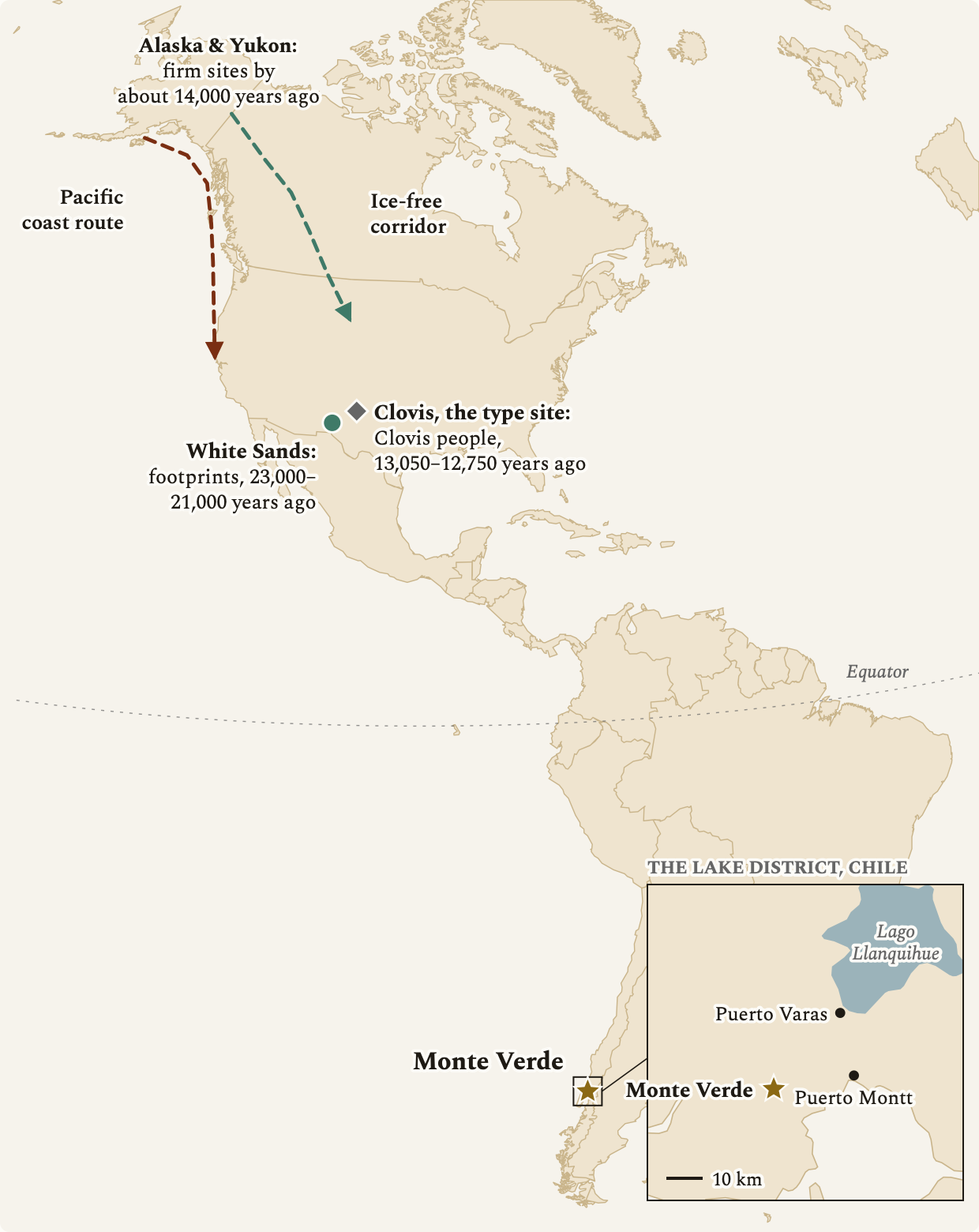
The whole story is in the deep dive on the Science page, with a cross-section of the valley, a timeline of every date, what the team found layer by layer, Rech’s Perspective and the caveats: Monte Verde, re-dated.
Words to know.
- Pleistocene / Holocene: the Ice Age epoch, and the warmer epoch that began about 11,700 years ago. The Middle Holocene here means about 8,200–4,200 years ago.
- Clovis: a North American culture known for its distinctive spear points, about 13,000 years old. Sites older than Clovis are called “pre-Clovis.”
- Tephra: ash and fragments thrown out by a volcanic eruption. A known tephra layer works as a time marker.
- Alluvial terrace: a flat step of sediment left by a stream that later cut down below it.
- Redeposition: old material eroded from one place and buried again in younger sediment, which makes the younger layer look older than it is.